
Repeatable holes and joints keep composites moving faster
As composite production ramps up across civil aerospace, attention often focuses on upstream gains, faster tape laying, shorter cure cycles and higher part throughput. However, a recurring constraint emerges further down the line during assembly, particularly at the drilling stage for carbon fibre reinforced polymer (CFRP) aerostructures. Christopher Lloyd, aerospace engineer at industrial drilling tool manufacturer Desoutter Tools, outlines how manufacturers can maintain stability as output increases.
According to the International Air Transport Association (IATA), passenger demand rose by 5.3 per cent, while supply chain disruption remained the primary challenge for airlines in 2025. This pressure translates directly to manufacturing environments. As composite-intensive wing designs evolve alongside design-for-manufacture approaches, the ability to produce CFRP structures consistently and without deviation becomes essential.
For this reason, discussions around composite manufacturing often centre on the hole. Despite advances in materials and design, mechanical joints remain unavoidable. Each drilled hole must integrate seamlessly into production flow, otherwise it risks triggering concessions that add inspection steps, documentation requirements and potential rework.
In CFRP structures, the cost of such concessions is amplified. High material value and sensitivity mean that rework can extend beyond the original issue, affecting multiple stages of the process.
Understanding the fundamentals of CFRP drilling
One of the most critical challenges in CFRP drilling occurs at breakthrough. Poorly controlled exits can result in fibre splitting, delamination and reduced structural integrity around the hole. As a result, controlled breakthrough is treated as a primary quality requirement rather than a finishing step.
Material variability also plays a role. CFRP components, especially those that have undergone local repair, may behave differently during machining. Parts that appear identical can respond unpredictably under drilling and fastening conditions, particularly as production rates increase.
Dry drilling is typically preferred when working with CFRP. Introducing lubricants can mix with carbon dust to form an abrasive compound that accelerates tool wear and damages internal components. As a result, effective dust extraction becomes essential, not only for operator safety but also for maintaining stable cutting conditions across repeated operations.
In situations where chip evacuation is problematic, vibratory drilling offers a solution. By introducing a controlled forward and backward motion, the process breaks swarf into smaller fragments, reducing the risk of chip build-up and supporting more consistent machining
Balancing flexibility with repeatability
High-rate composite production rarely takes place in fully enclosed or simplified setups. Access limitations, complex jig configurations and part variation are common, particularly in aerostructures where design constraints often dictate manufacturing conditions.
Manufacturers must therefore strike a balance between flexibility and control. Systems must be adaptable enough to reach challenging geometries, while still delivering repeatable results.
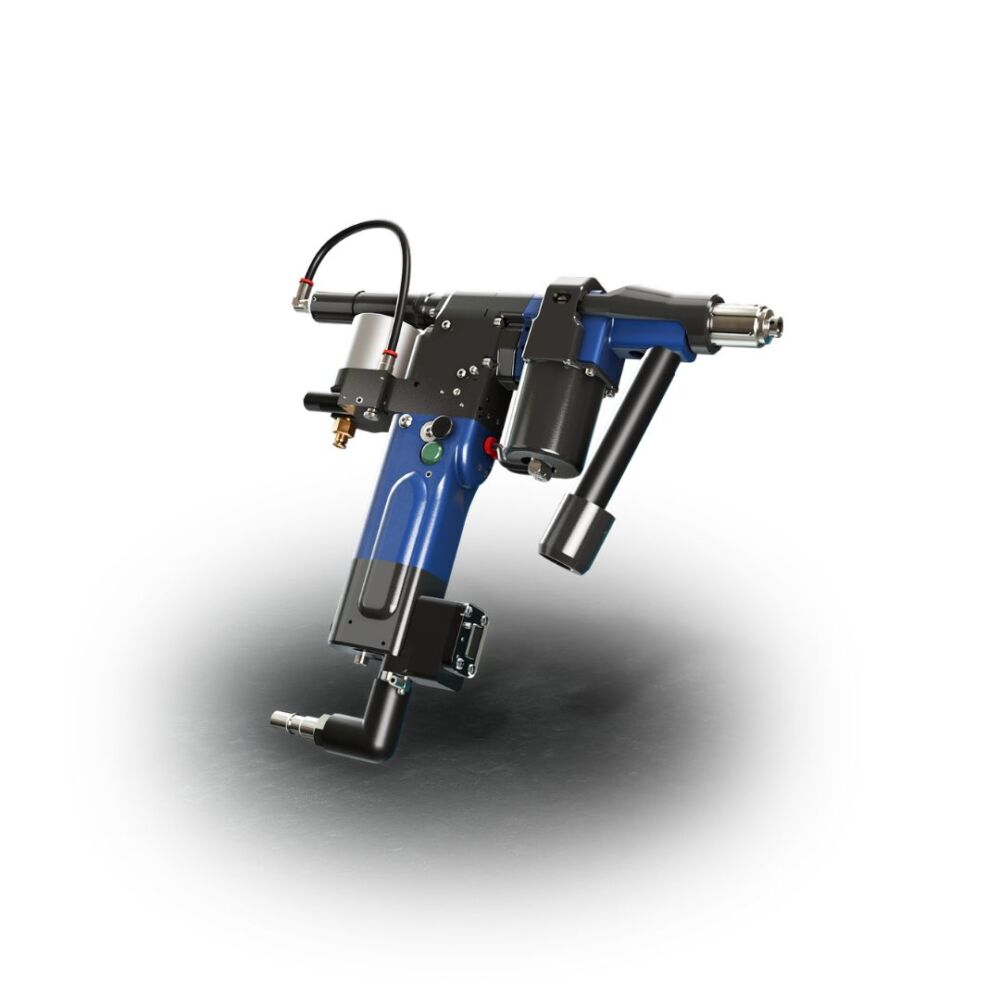
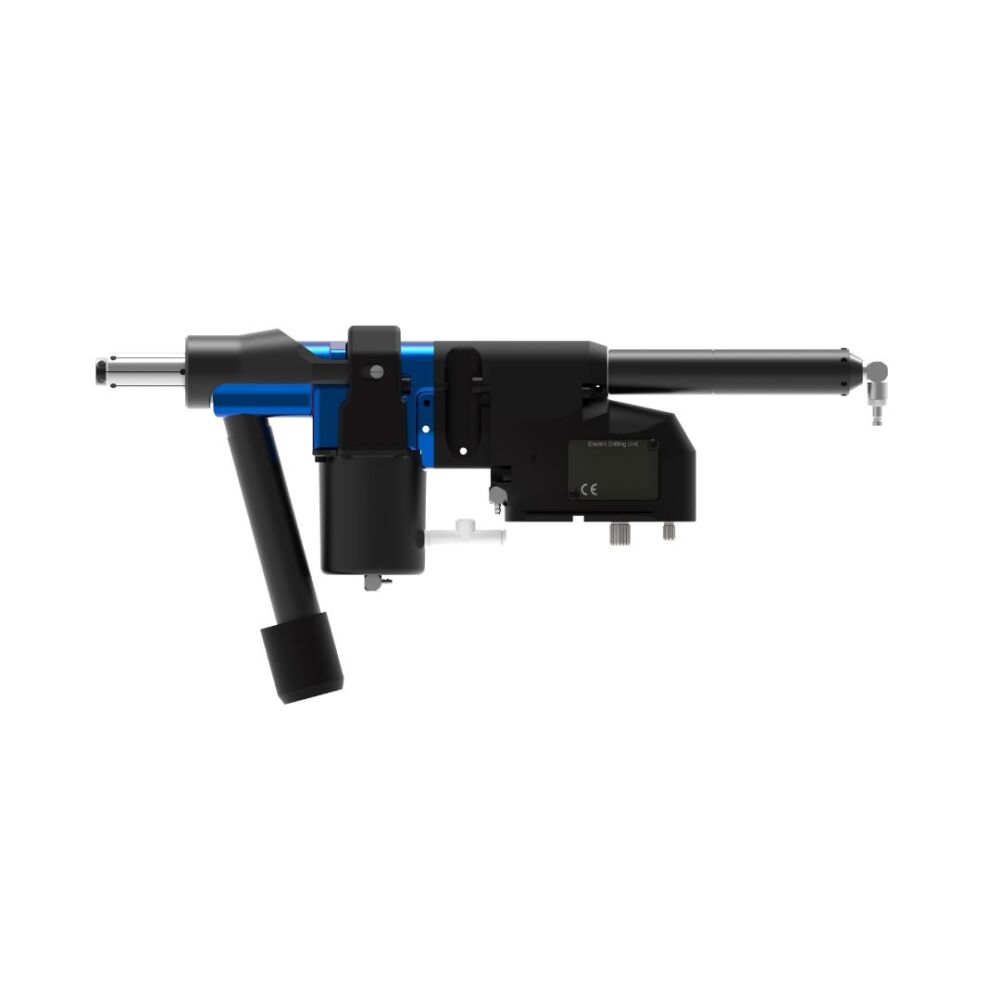
Setitec semi-automatic drilling system is designed to address this requirement. Supporting drilling, reaming and countersinking operations, it incorporates quick-change heads with RFID identification and separates speed and feed control through its drive architecture. This approach helps maintain consistency across operations while reducing cycle time.
As production volumes increase, the benefits of semi-automation become more apparent. Parameters such as speed, feed rate, clamping force and lubrication strategy where applicable can be predefined and maintained throughout long production runs. Features such as real-time monitoring and automatic entry point detection further support stability, even when working with variable surfaces.
Achieving measurable gains in speed
CFRP aerostructures are frequently drilled as part of hybrid stacks that combine composite materials with aluminium or titanium. These combinations introduce a key challenge; each material requires different machining parameters to achieve optimal results.
With pneumatic systems, manufacturers often default to conservative settings that accommodate the most demanding material in the stack. While this protects quality, it can significantly slow down processing in layers that could otherwise be machined more efficiently.
Electric drilling architectures offer greater flexibility. By allowing independent control of feed and speed, parameters can be adjusted dynamically as the tool passes through different materials. These adjustments can be programmed into the process, removing the need for manual intervention.
The impact is most clearly seen in cycle times. In one comparison involving a stack of 1.5 inches of CFRP and 0.75 inches of titanium, a pneumatic setup required 2 minutes and 4 seconds per hole. An equivalent electric process reduced this to 46 seconds, representing a 63 per cent improvement. When multiplied across thousands of holes in a single aerostructure, the time savings become substantial.
Improving visibility and control
The inherent variability of composite materials drives the need for greater process visibility. Localised differences, particularly following rework, may not be immediately visible but can affect machining outcomes.
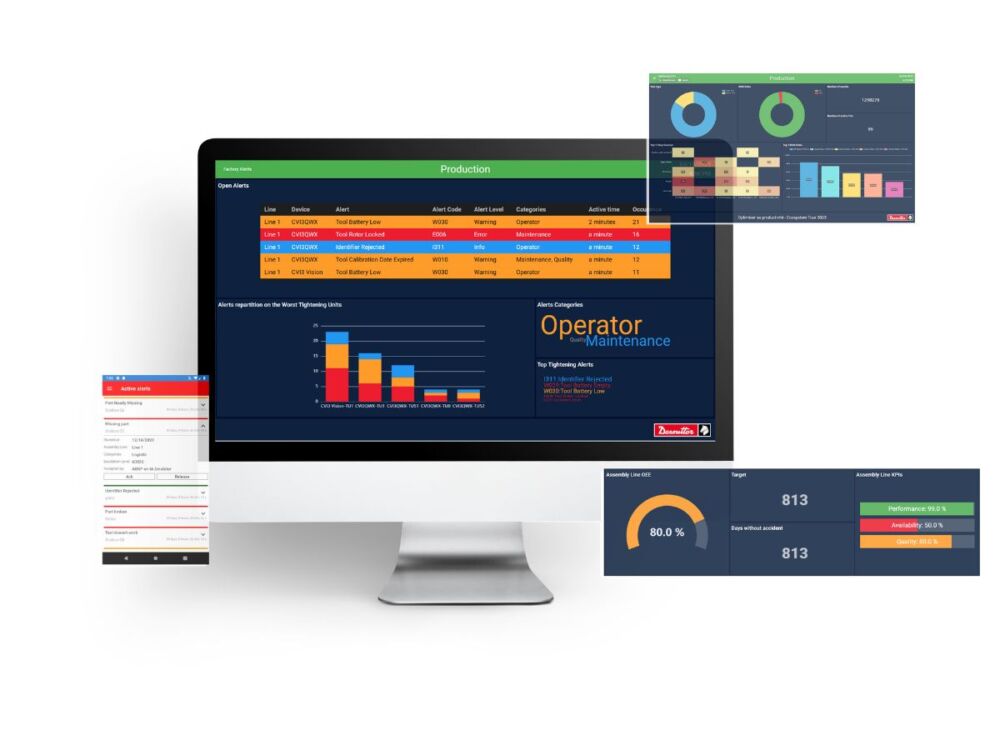
Digital tools such as DeMeter provide real-time insights into drilling and tightening operations. By capturing process data, they enable early identification of deviations, support product conformity and create full traceability through a digital record for each component.
Recent updates have introduced curve analytics, allowing manufacturers to monitor the full tightening curve rather than relying solely on final torque values. This makes it possible to detect subtle changes linked to tool wear or process variation and to classify anomalies more effectively, enabling faster corrective action in safety-critical applications.
While upstream improvements continue to accelerate composite production, true efficiency is achieved at the assembly stage. Consistent hole quality, achieved through controlled breakthrough, effective extraction and stable parameters across material stacks, is what enables production to scale. When these elements are in place, speed becomes a function of repeatability rather than compromise.
To see how Desoutter’s Setitec aerospace drilling range supports composites at rate, schedule a visit to the Innovation Centre in Congleton, Cheshire here.