
~ Creating integrated traffic management systems ~
Sudden weather changes can rapidly turn safe roads into high-risk environments. For infrastructure operators, the challenge is ensuring traffic management systems can respond fast enough to protect road users. Here, Andrei Iacobita, managing director of traffic management systems specialist IESYS, explains how integrated traffic management systems enhance road safety while optimising traffic flow through real-time monitoring and control.
The United Nations’ Road Safety Strategy set a goal for 2030 to reduce road deaths and serious injuries by 50 per cent. Achieving this depends not only on driver behaviour, but on infrastructure that can anticipate and respond to risk. Traffic management systems must therefore be capable of reacting immediately to changing weather conditions to help prevent avoidable incidents.
Staying ahead of sudden weather risks
Sudden temperature drops, heavy rain or dense fog can make roads hazardous for drivers long before traffic patterns visibly change. By the time a hazard is clearly noticeable, drivers may already be affected.
Reducing the time between detecting weather-related risks and acting on them allows operators to deploy response teams, issue alerts and adjust traffic control strategies almost instantly.
This relies on continuous input from intelligent monitoring systems, where video analytics and roadside sensors can automatically detect incidents such as stopped vehicles, wrong-way driving or hazardous conditions including fog or debris, often before they are visible to drivers.
By closing the gap between detection, decision and communication, operators can respond in near real time, shifting from reactive intervention to proactive risk management.
From data to decisions
In adverse weather conditions, no single data source offers a full picture of road safety. The value lies in combining multiple data streams in real-time to generate actionable insight into current conditions.
From an operator’s perspective, several key data categories are crucial. Road surface conditions, visibility, wind speed, wind direction, air temperature and traffic behaviour are all essential for understanding how adverse weather conditions affect road safety and traffic.
Relying on one data category alone is insufficient, as weather rarely affects a single factor. Roads may appear functional based on traffic flow, while surface conditions are already hazardous, or visibility drops suddenly without immediate congestion.
Addressing this requires continuous, high-resolution data collection across the network. Advanced monitoring systems can capture detailed traffic metrics, such as vehicle speed, classification and density alongside environmental inputs, enabling a more precise and dynamic understanding of how conditions develop in real time.

IES2 – integrated traffic management systems
Shifting from monitoring to control
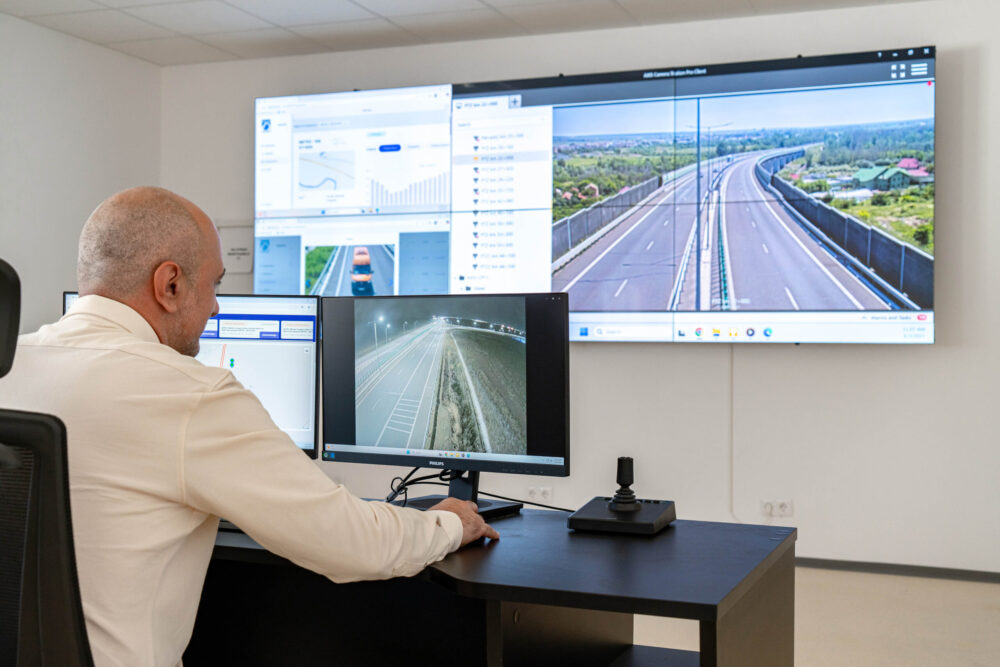
When traffic, video, incident detection and meteorological data are integrated into one platform, traffic management shifts from passive monitoring to active control.
In fragmented systems, operators spend valuable time switching between tools, validating alerts and interpreting disconnected data. This slows decision-making and increases reliance on individual judgement.
A unified traffic management platform enables simpler data monitoring with fewer operators. Inputs are correlated automatically and presented in a coherent way. Cross analysis between data streams and equipment become more straightforward, enabling operators to interpret information quickly and make decisions in real-time.
As a result, traffic management teams focus less on understanding what has happened, and more on deciding what to do next and how quickly.
This approach is demonstrated in IESYS’s integrated traffic management and control system project for the National Company for Road Infrastructure Administration, Romania (CNAIR).
For Lot 4 of the A0 South Bucharest Ring Motorway, the goal was implementing an integrated traffic management and control system to ensure safe, efficient traffic flows on one of Romania’s most critical bypass corridors.
Rather than deploying standalone systems, the project required the integration of multiple technologies, including traffic monitoring, incident detection, meteorological systems and roadside equipment into a single operational framework. This ensured that data from across the network was synchronised and contextualised for faster, more consistent decision-making.
A key focus of the implementation was ensuring system interoperability and reliability at scale, enabling continuous operation across the corridor while maintaining accuracy in data collection and incident response.
The result was a more resilient traffic management capability, particularly in complex or rapidly changing conditions, with a system architecture designed to support future expansion and additional layers of functionality as the network evolves.
To explore more about how infrastructure design and system integration can be delivered for road networks, have a look at IESYS’s centralised traffic management solutions.

About IESYS: IESYS is a trusted engineering partner delivering integrated automation and intelligent infrastructure solutions for airports, transport infrastructure and complex industrial environments. Engineering with purpose, we design and integrate technologies that help critical operations run safely, efficiently and reliably, turning operational challenges into measurable progress.
We work closely with clients to understand each system in depth and develop tailored automation, control and infrastructure solutions aligned with operational goals. By combining strong engineering expertise with practical innovation, we transform complexity into scalable, future-ready systems that enhance performance, improve safety and reduce operational risk.
Our services span the full project lifecycle, from consultancy and design through to implementation, integration, commissioning and ongoing support. This end-to-end approach ensures seamless delivery, dependable performance and long-term operational resilience across mission-critical environments.
Guided by our core values of responsibility, professionalism, integrity, team spirit and passion & courage, we focus on delivering engineering excellence with lasting impact. Every solution we develop reflects our commitment to precision, reliability and purposeful engineering that enables organisations to move from challenge to progress.